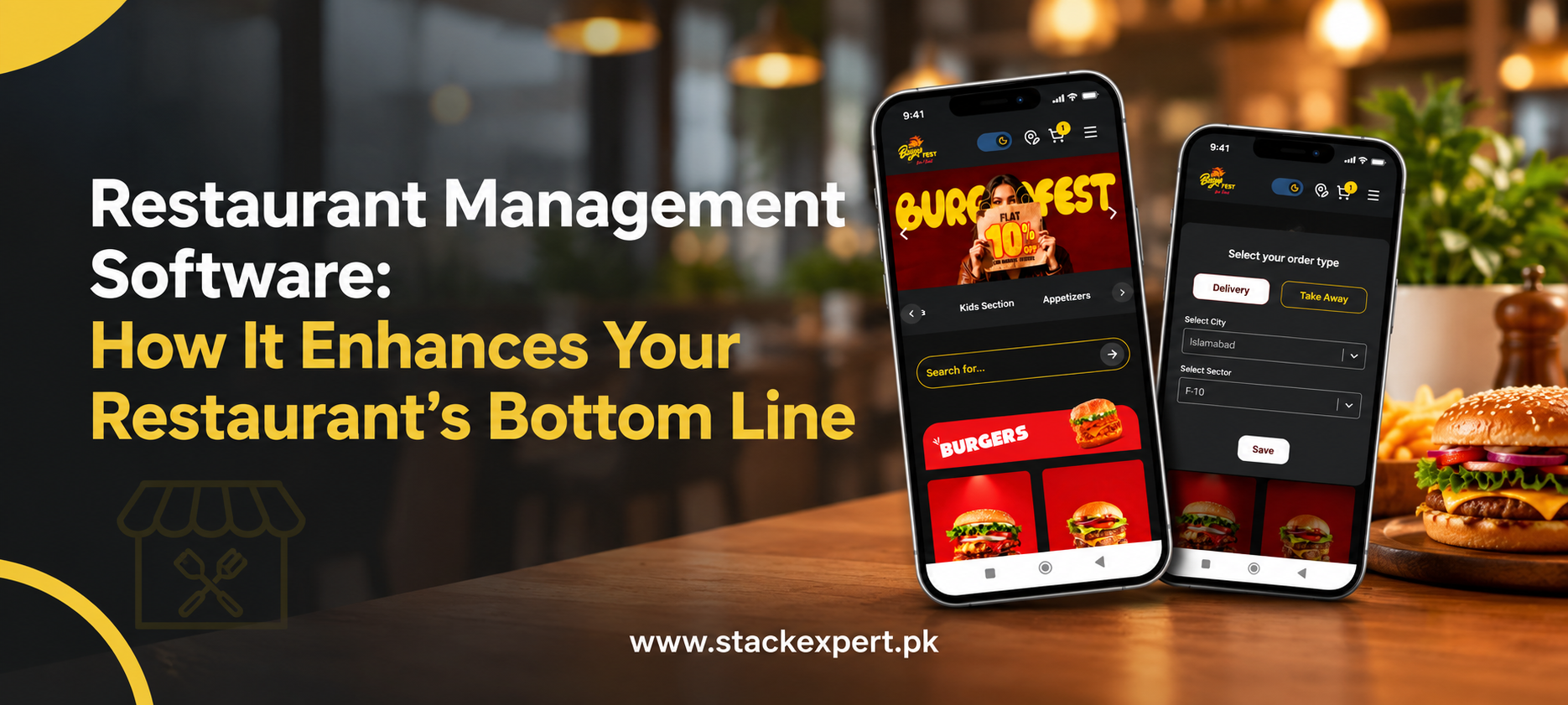

Running a restaurant can look straightforward from the customer’s side. An order comes in, food gets prepared, the bill is paid, and everyone moves on. Behind the counter? It’s a completely different story.
There are ingredients to track, employees to manage, orders coming from different channels, tables to turn over, suppliers to coordinate, payments to reconcile, and dozens of small expenses quietly eating into margins. When all of this is handled through spreadsheets, notebooks, disconnected apps, or manual processes, even a busy restaurant can struggle to make the profit it should.
That is where Restaurant Management Software becomes valuable.
Modern restaurant management systems bring sales, billing, inventory, orders, staff, menus, reporting, and customer information into one connected platform. Stack Expert’s own Stack e-Food Restaurant Management System, for example, combines POS functionality with inventory tracking, menu management, order handling, staff scheduling, and other restaurant operations.
But the real question restaurant owners care about is simpler: Can restaurant management software actually improve your bottom line?
Yes—and here’s how.
What Is Restaurant Management Software?
Restaurant Management Software is a digital platform that helps restaurants manage everyday operations such as POS billing, orders, inventory, menus, employees, reporting, and customer information from a centralized system.
It goes beyond a basic restaurant POS system.
A traditional Point of Sale system primarily handles orders, payments, and receipts. A full restaurant management system connects those transactions with the operational side of the business, stock usage, menu performance, staffing, financial visibility, and sometimes online ordering and multi-branch management.
Stack Expert describes its restaurant solution this way: the POS handles order taking, payments, receipts, and customer information, while the wider restaurant management platform extends into operational management and inventory control.
For an owner or manager, that means fewer disconnected pieces to chase every day.
How Does Restaurant Management Software Increase Restaurant Profitability?
The biggest financial advantage isn’t one dramatic saving. It comes from fixing multiple small leaks that happen every day.
A restaurant may lose money through excess food waste, incorrect stock counts, unauthorized discounts, inefficient staffing, missed orders, inconsistent pricing, poor purchasing decisions, and menu items that simply aren’t profitable enough.
A good restaurant management system makes those problems easier to see, and much harder to ignore.
1. Better Inventory Management Means Less Food Waste
Food inventory is one of the most sensitive parts of restaurant profitability. Without accurate stock control, managers can easily over-order ingredients, discover shortages too late, or find that the physical inventory doesn’t match the figures written in a spreadsheet.
A restaurant inventory management system creates greater visibility into stock movement. When inventory and sales information are connected, restaurant managers can better understand what is being used, what needs replenishing, and where unnecessary waste may be occurring.
This becomes even more important for restaurant groups. Stack Expert’s multi-branch restaurant management guidance highlights centralized inventory tracking as a way to reduce inventory mismatches and improve food-cost control across different locations. It’s not glamorous, admittedly. But saving a small percentage of inventory waste every month can have a very real effect on margins.
2. Faster POS and Order Management Reduce Operational Friction
During a lunch or dinner rush, seconds matter.
Orders written manually can be misread. Verbal communication between front-of-house staff and the kitchen can get messy. Customers change their minds. Tables split bills. Delivery orders arrive at the same time as dine-in orders. This is exactly where a restaurant POS and order management system earns its place.
With orders entered digitally, information can move through the restaurant in a more structured way. Staff spend less time correcting mistakes and more time serving customers.
Stack e-Food brings POS, order handling, menu management and related restaurant functions into the same system rather than treating them as completely separate workflows.
For the restaurant owner, smoother operations may mean quicker service, fewer avoidable errors, and better use of available tables and staff.
3. Real-Time Sales Reporting Helps Owners Make Better Decisions
A busy restaurant is not necessarily a profitable restaurant. That’s an uncomfortable distinction, but an important one. Imagine selling hundreds of meals every day without knowing:
- Which dishes generate the strongest margins
- Which items barely sell
- What time of day produces the most revenue
- Which branch is performing best
- Whether discounts are reducing profitability
- How current sales compare with previous periods
With manual reporting, that information often arrives too late. Restaurant analytics and reporting software can give owners much faster visibility into sales and operational performance.
For multi-location operations, centralized restaurant software can also provide branch-level reporting and broader financial transparency from one system.
That lets management act on information while it is still useful, not three weeks later when somebody finally finishes a spreadsheet.
4. Menu Management Can Improve Your Profit Margins
Not every popular dish is profitable, and not every high-margin dish sells well. That is why menu decisions shouldn’t rely entirely on intuition. When restaurant owners can analyze sales information alongside operational data, they can begin identifying which menu items deserve more attention.
A centralized restaurant menu management system also makes it easier to maintain consistent menu information instead of repeatedly changing prices or availability manually across different workflows.
For restaurant chains, centralized systems are particularly useful because menu controls and pricing can be standardized between branches. Stack Expert identifies consistent pricing, centralized menu control, and standardized operations among the advantages of multi-location restaurant software. A well-managed menu isn’t just nicer for customers. It can be a profitability tool.
5. Restaurant Staff Management Becomes Easier
Labor is another major operating expense. Too many employees on a quiet shift increases costs. Too few during peak hours creates slow service, stressed employees, and unhappy customers. Restaurant staff management software can help managers coordinate schedules and connect staffing decisions more closely with actual restaurant operations.
Stack Expert’s Stack e-Food system includes staff scheduling alongside its POS, inventory, order, and menu-management capabilities. Over time, better operational data can help management understand when the restaurant genuinely needs more people and when staffing can be adjusted.
That doesn’t mean cutting staff simply to save money. It means putting the right number of people in the right place at the right time.
6. Multi-Branch Restaurant Management Provides Centralized Control
Managing one restaurant is challenging enough. Managing five branches through separate spreadsheets, WhatsApp groups, individual POS systems, and manager reports can become chaotic very quickly.
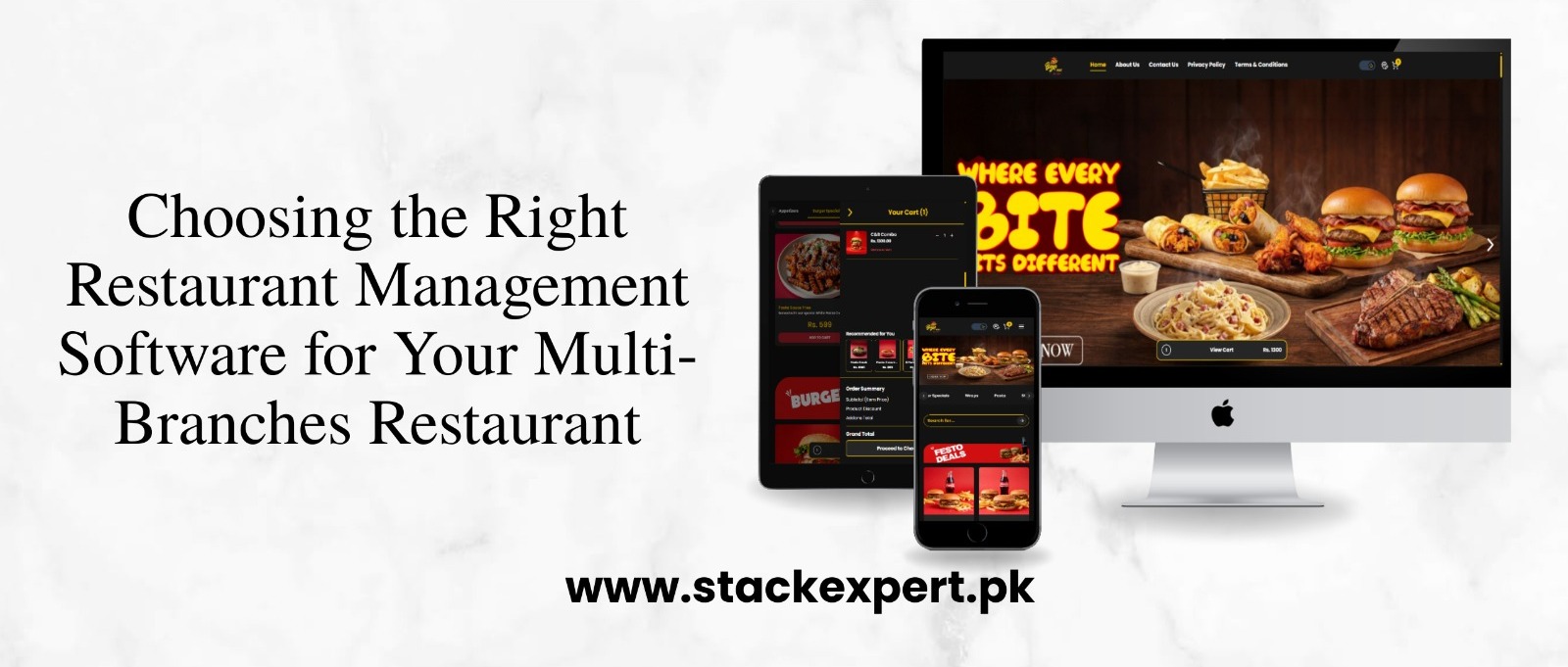
A multi-branch restaurant management system allows restaurant groups to centralize important functions.
Stack Expert’s multi-location approach includes centralized reporting, inventory management, pricing, menu control, staff oversight, and branch-performance monitoring. That gives management a much clearer picture of the overall business.
Instead of asking every branch manager to send numbers separately, owners can compare locations and spot differences more quickly. For expanding restaurants and franchises, that kind of visibility becomes increasingly important.
7. Online Ordering Creates More Revenue Opportunities
Modern customers don’t interact with restaurants through one channel anymore. They may dine in today, order delivery tomorrow, and place a takeaway order through their phone on the weekend. An integrated digital restaurant setup can connect traditional restaurant operations with these newer sales channels.
Stack Expert also develops restaurant mobile applications with features including menu browsing, table reservations, online delivery and takeaway ordering, loyalty programs, notifications, and integrated payments. For restaurants investing in digital ordering, the goal isn’t simply to have an app because competitors have one.
It is to make ordering easier and create more opportunities for customers to buy.
8. Better Customer Management Can Encourage Repeat Business
Getting a customer through the door once is useful. Getting them to return again and again is where the economics become more interesting.
Depending on the restaurant technology being used, customer information can support loyalty programs, targeted offers, order history, promotions, and more personalized engagement.
Stack Expert’s restaurant Mobile application offering includes loyalty functionality and push notifications intended to strengthen customer engagement and encourage repeat ordering.
A connected restaurant CRM and POS system can therefore contribute to revenue growth from the customer side while inventory and operational tools work on the cost side.
What Features Should Restaurant Management Software Have?
If you’re comparing the best restaurant management software, don’t choose a system simply because it has a long feature list. Look for functions that solve real operational problems.
For most restaurants, useful features include:
- Restaurant POS and billing
- Inventory and stock management
- Menu management
- Order management
- Sales and financial reporting
- Employee and staff management
- Customer management
- Multi-branch management
- Online ordering integration
- Role-based operational control
- Cloud or remote management
- Scalability as the business expands
The right combination depends on whether you operate a café, takeaway, full-service restaurant, cloud kitchen, franchise, or multi-location restaurant group.
Why Choose Stack Expert Restaurant Management Software?
Stack Expert provides Restaurant Management Software through its Stack e-Food solution, bringing together core restaurant functions such as POS, inventory tracking, menu management, orders, and staff scheduling.
For growing restaurant businesses, Stack Expert also develops broader custom software ecosystems and restaurant mobile solutions rather than limiting its offering to a standalone cash-register application. That matters because restaurants don’t all operate the same way.
A single-location café may require simple order and inventory control, while a growing restaurant chain may need centralized reporting, multi-branch management, customer-facing mobile apps, and customized workflows.
Explore Stack Expert’s Restaurant Management System to see how Stack e-Food can support restaurant operations.
Turn Better Restaurant Management Into Better Business Performance
Profit isn’t created only at the cash register.
It’s influenced by what happens before and after every sale: how ingredients are purchased, how orders are handled, how staff are scheduled, how accurately inventory is tracked, how menus are managed, and how quickly owners can understand what is happening inside the business.
That is the real value of Restaurant Management Software.
By bringing restaurant operations into one connected environment, owners can spend less time chasing information and more time making informed decisions.
For restaurants that have outgrown spreadsheets, disconnected systems, or basic POS software, Stack Expert’s Stack e-Food Restaurant Management System provides a more centralized approach to managing daily operations.
Discover Stack Expert Restaurant Management Software and see how a better-managed restaurant can become a more efficient and ultimately more profitable business.
Frequently Asked Questions
Q1. What is Restaurant Management Software?
Restaurant Management Software is a centralized digital system used to manage restaurant operations such as POS billing, orders, inventory, menus, staff, customer information, and reporting.
Q2. How can restaurant management software increase profit?
It can improve profitability by giving managers greater control over food inventory, wastage, sales performance, labor allocation, order processing, menu decisions, and other operating costs.
Q3. Is restaurant management software the same as a POS?
No. A POS primarily manages sales transactions and payments. A complete restaurant management system can also include inventory, menu management, reporting, employee management, customer data, online ordering, and multi-branch functionality.
Q4. Can restaurant management software manage multiple branches?
Yes. Multi-location restaurant systems can centralize branch reporting, inventory, menu controls, pricing, and operational oversight. Stack Expert specifically provides solutions aimed at multi-branch restaurant management.
Q5. Can restaurant software integrate with online ordering?
Yes. Restaurant technology can support digital ordering and customer-facing applications. Stack Expert’s restaurant app development offering includes delivery, takeaway, reservations, loyalty functions, and payment integrations.
Q6. Is restaurant management software suitable for small restaurants?
It can be. Smaller restaurants may start with core POS, order, inventory, and reporting capabilities and expand their technology requirements as the business grows.