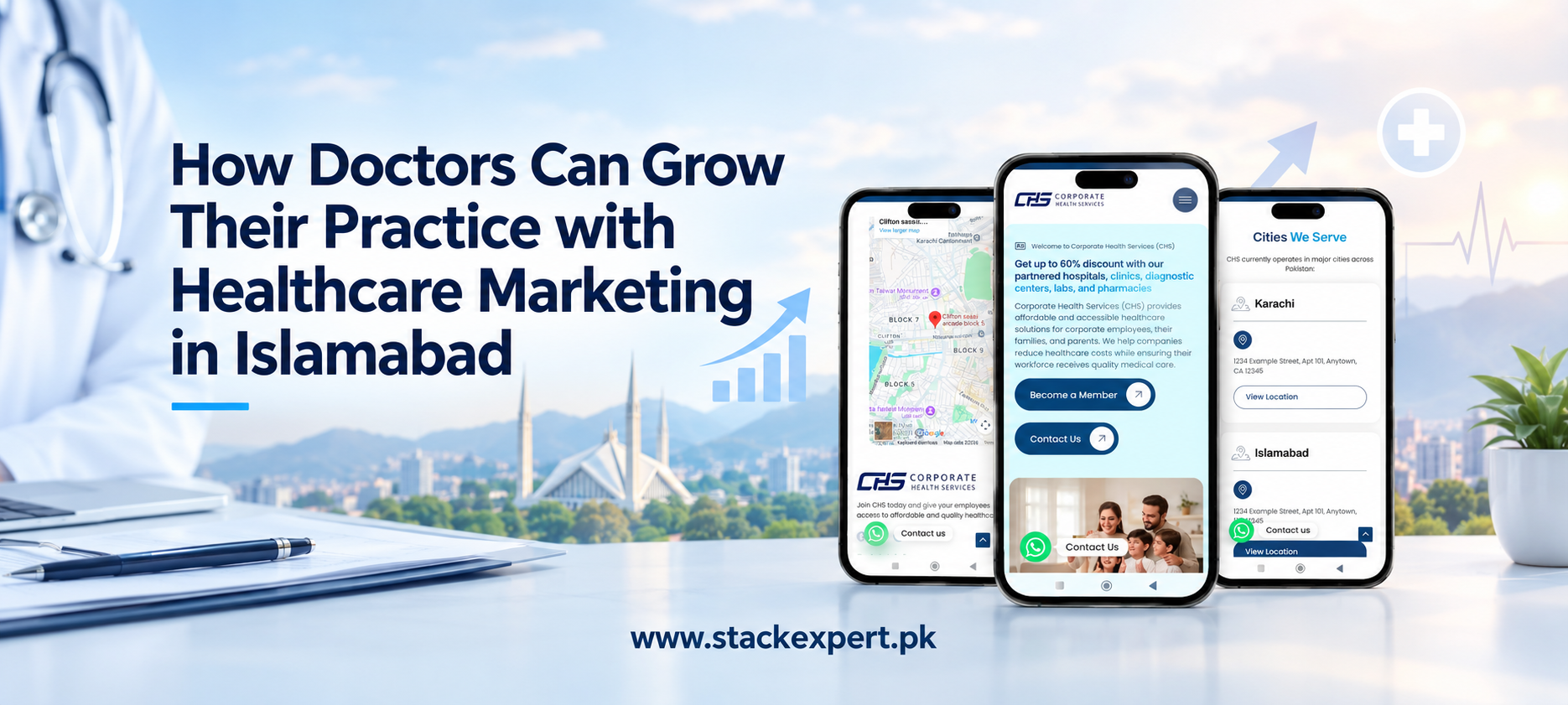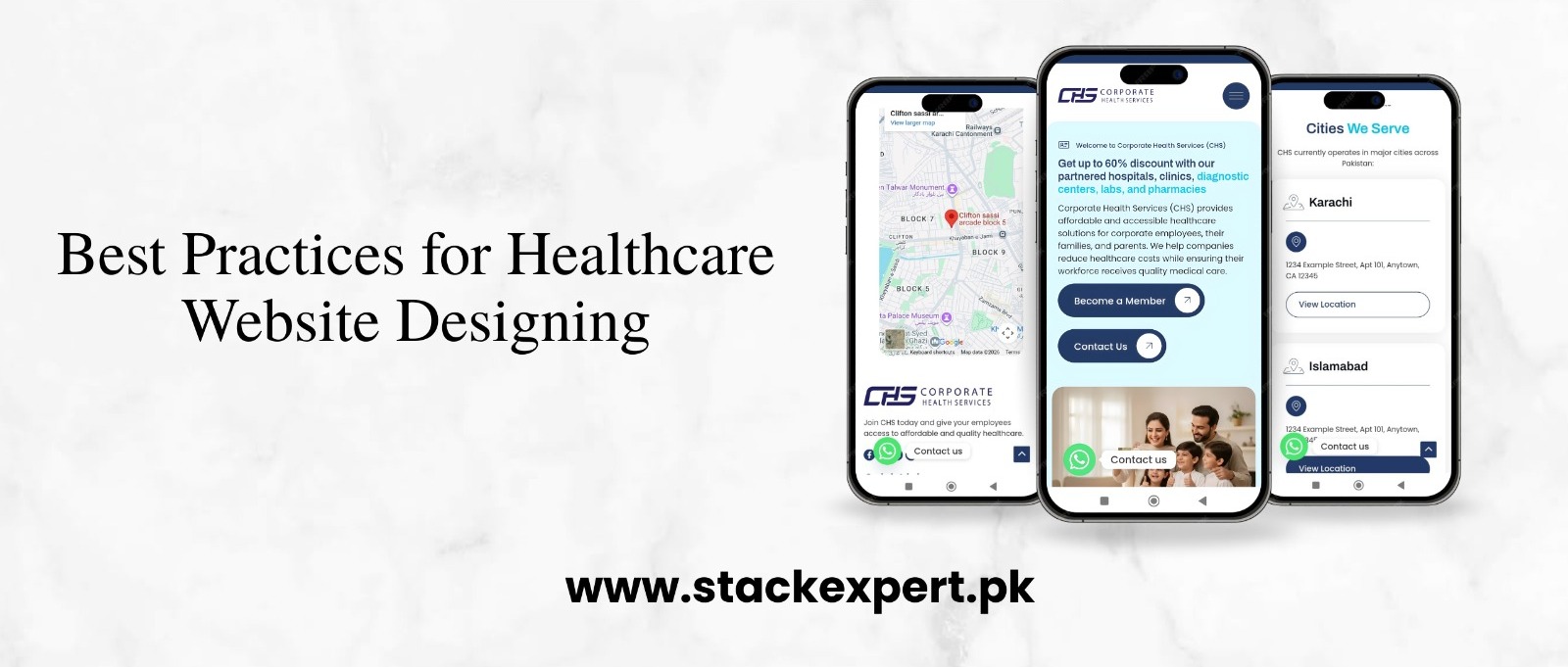

In today’s digital world, healthcare marketing has evolved beyond traditional methods. A well-designed healthcare website is more than just a digital brochure, it’s an essential tool for attracting and engaging patients, building trust, and improving your practice’s online presence. Whether you’re running a private clinic, a hospital, or a healthcare service provider, your website plays a crucial role in your marketing strategy.
If you want to stand out in the competitive healthcare sector, it’s essential to follow the best practices for healthcare website design. At Stack Expert, we understand the importance of creating a user-friendly, functional, and optimized healthcare website. In this blog, we’ll walk you through key design principles and best practices that can enhance your healthcare marketing efforts.
Why Healthcare Website Design Matters
Before diving into the specifics of healthcare website design, it’s important to understand why it matters. A well-designed website is the cornerstone of healthcare marketing. Patients increasingly turn to the internet to search for healthcare providers, schedule appointments, and read reviews. If your website isn’t properly designed, you risk losing potential patients to your competitors.
A great healthcare website isn’t just about aesthetics; it’s about user experience (UX) and functionality. By improving your site’s design, you can:
- Build trust with potential patients.
- Improve visibility in search engines (SEO).
- Enhance user experience and ease of navigation.
- Convert visitors into patients.
- Stay compliant with healthcare regulations (HIPAA, accessibility standards).
Now that we understand why healthcare website design is important, let’s explore the best practices that will help your website become a powerful tool for healthcare marketing.
1. Focus on User-Centered Design
One of the most critical aspects of healthcare website design is ensuring that it meets the needs of your visitors. A user-centered design focuses on the user experience and aims to provide easy navigation, clear information, and a seamless experience.
When designing a healthcare website, consider the following:
- Simple and intuitive navigation: Make sure users can easily find the information they need, whether it’s booking an appointment, reading about services, or finding your contact details. Group similar content together and use clear, descriptive headings.
- Clear Calls-to-Action (CTAs): Your website should have clear CTAs guiding users toward taking specific actions, such as scheduling an appointment, calling the office, or contacting you for a consultation.
- Mobile-First Design: A large portion of healthcare website traffic comes from mobile devices. Ensure your website is responsive and adapts seamlessly to different screen sizes.
- Fast Loading Speed: Slow websites can frustrate users, so optimize your website for fast loading times to enhance the user experience.
2. Implement Strong Branding and Trust Signals
Healthcare marketing heavily relies on trust. When visitors land on your website, you need to reassure them that your practice is credible, professional, and capable of meeting their healthcare needs. The design of your website should reflect this trustworthiness.
Here’s how you can establish trust:
- Consistent Branding: Use your logo, colors, and fonts consistently throughout your website to create a cohesive brand identity. This not only helps with recognition but also builds credibility.
- Patient Testimonials: Showcase real reviews from patients to establish social proof. Positive testimonials can greatly influence a potential patient’s decision.
- Accreditation and Certifications: Display any relevant certifications, accreditations, and professional memberships prominently on your website. These symbols validate your expertise and compliance with industry standards.
- Security Features: Ensure that your website is secure by using HTTPS and displaying trust seals. This is especially important if you handle sensitive patient data.
3. Prioritize SEO for Healthcare Websites
In healthcare marketing, SEO is essential to ensure your website is visible to potential patients. A well-optimized website is more likely to rank higher in search engine results, making it easier for patients to find you. SEO for healthcare websites includes:
- Keyword Optimization: Use keywords relevant to healthcare marketing, such as “best healthcare providers in [location],” “healthcare services,” and “doctor appointment booking.” Ensure these keywords are used naturally in your content, meta tags, headings, and image alt tags.
- Local SEO: Many healthcare searches are location-based. Make sure your website is optimized for local SEO by including your location in the content and creating a Google My Business profile.
- Content Marketing: Blog posts, articles, and guides can help your website rank for long-tail keywords related to healthcare. These posts not only drive traffic but also establish your authority in the healthcare field.
- Structured Data: Implement schema markup to help search engines understand your content better. Structured data can also enhance your search engine results with rich snippets, making your website more visible.
4. Make Healthcare Information Accessible
Accessibility is a critical factor in healthcare marketing. Your website should be designed to be accessible to everyone, including people with disabilities. Making your website accessible not only demonstrates your commitment to inclusivity but also helps you comply with legal requirements in some jurisdictions.
Some accessibility tips include:
- Alternative Text for Images: Use descriptive alt text for all images, which helps users with visual impairments understand the content.
- Clear Fonts and Contrasts: Choose fonts that are easy to read and ensure good contrast between text and background colors.
- Keyboard Navigation: Ensure that your website can be navigated using a keyboard alone, for users who can’t use a mouse.
- Transcripts for Videos: Provide transcripts for any videos on your site, which helps users with hearing impairments.
5. Incorporate Patient-Centric Features
The ultimate goal of your healthcare website is to convert visitors into patients. To achieve this, you need to offer patient-centric features that make it easy for users to engage with your practice.
Some features to consider:
- Online Appointment Booking: Allow users to schedule appointments directly from your website. This feature saves time for both patients and staff.
- Patient Portal: A secure portal where patients can view their medical records, prescription history, and appointment details can enhance the patient experience and streamline administrative tasks.
- Virtual Consultations: With telemedicine becoming increasingly popular, offering virtual consultations directly from your website can help you serve patients who may not be able to visit your office in person.
- Contact Forms and Chatbots: Make it easy for visitors to get in touch with you through contact forms or live chat options. Automated chatbots can provide immediate answers to common questions and schedule consultations.
6. Ensure HIPAA Compliance
Healthcare websites need to comply with specific regulations, especially when it comes to patient data. The Health Insurance Portability and Accountability Act (HIPAA) sets the standard for the protection of patient information in the United States.
To ensure HIPAA compliance, you should:
- Use encrypted communication for patient interactions.
- Ensure that patient data is stored securely.
- Provide a privacy policy that clearly outlines how patient data is used and protected.
7. Use High-Quality Imagery and Visuals
Visuals play a significant role in healthcare website development. High-quality images of your facility, staff, and patients (with consent) help create a welcoming atmosphere and put visitors at ease. Avoid generic stock photos, and instead, use real images that reflect the care and compassion of your practice.
Additionally, infographics and videos can help explain complex medical information in an easy-to-understand manner, making your content more engaging.
Conclusion
Healthcare marketing Services is about building trust, making information accessible, and providing excellent service. A well-designed healthcare website can help you achieve all of this and more. By focusing on user-centered design, prioritizing SEO, ensuring accessibility, and offering patient-centric features, you can create a website that enhances your online presence and drives more patients to your practice.
At Stack Expert, we specialize in healthcare website design that combines aesthetics, functionality, and performance. If you’re looking to build or optimize your healthcare website, contact us today to learn how we can help.