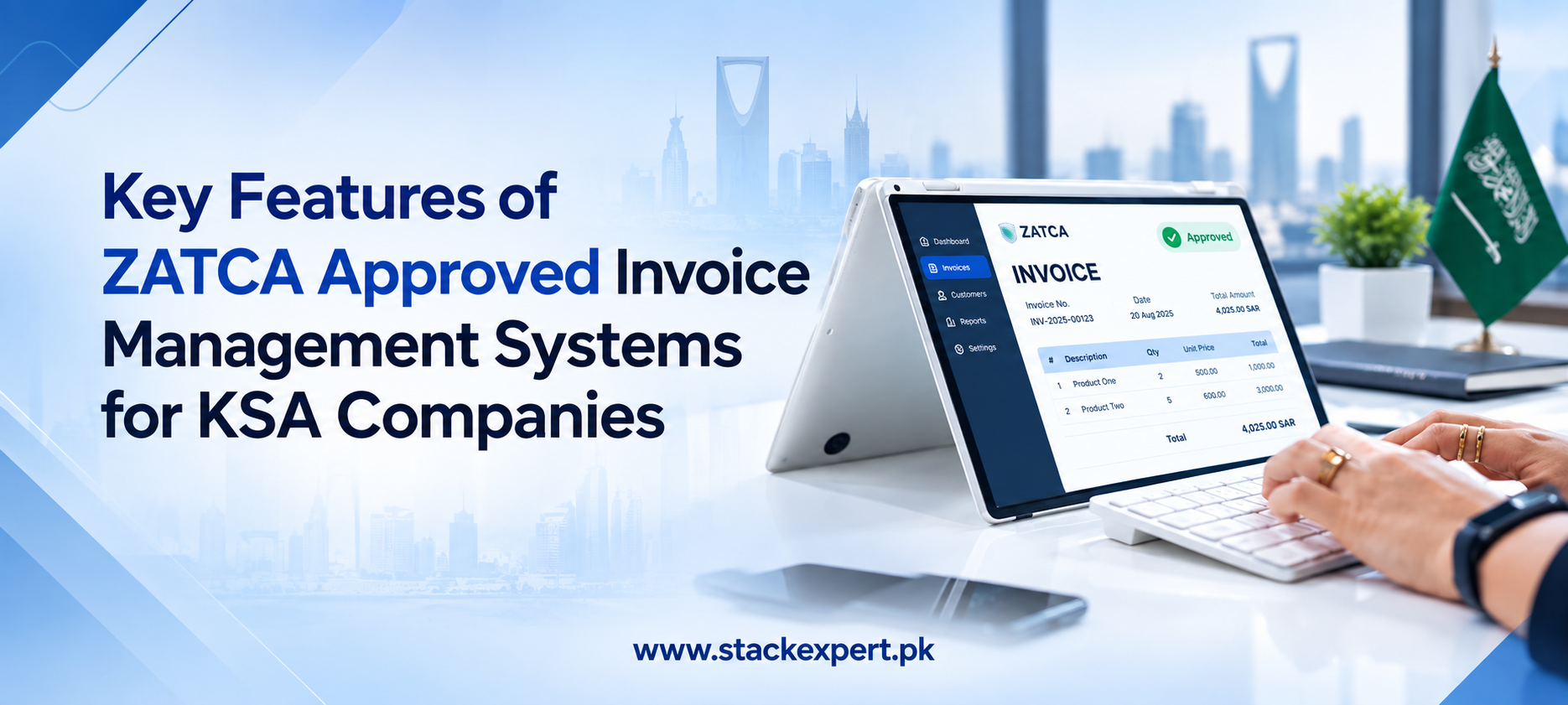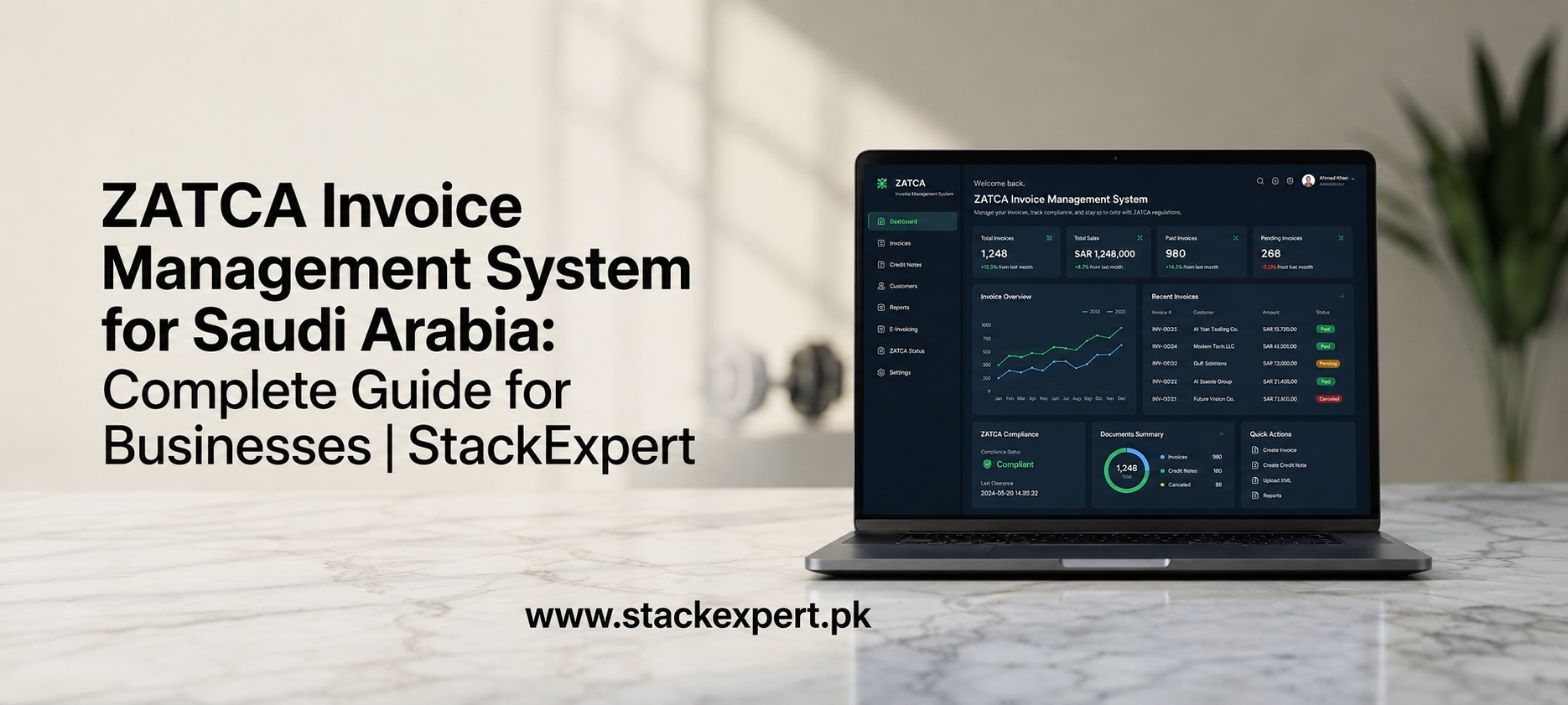

Running a business in Saudi Arabia now involves much more than generating an invoice, printing it and handing it to the customer. Businesses must produce invoices in a structured electronic format, maintain accurate tax records and, when selected for the Integration Phase, connect their invoicing system with ZATCA’s Fatoora platform. This is where reliable ZATCA E-Invoicing Software for Saudi Arabia becomes essential.
Whether you manage a retail store, restaurant, construction company, healthcare facility, online business or large corporate operation, your invoicing system directly affects your tax compliance and everyday financial management. A proper solution can automate invoices, calculate VAT, maintain transaction records and reduce the risk of human error.
However, not every accounting application or point-of-sale system meets Saudi e-invoicing requirements. Businesses need a system designed around the technical, tax and security standards established by the Zakat, Tax and Customs Authority.
What Is ZATCA E-Invoicing Software?
ZATCA e-invoicing software is an electronic system used to generate, process, store and manage tax invoices according to Saudi Arabia’s e-invoicing regulations, commonly known as Fatoora.
An electronic invoice is not simply a scanned paper invoice or a PDF created manually. ZATCA defines it as a tax invoice generated in a structured electronic format through an electronic solution. The system must also support electronic credit notes and debit notes. Depending on the business, the solution may operate as:
- Cloud-based invoicing software
- Enterprise resource planning software
- Accounting and VAT management software
- Retail point-of-sale software
- Restaurant billing software
- Custom invoice management software
- An invoicing module connected to an existing ERP
The main objective is to make invoice generation secure, traceable and consistent with Saudi VAT regulations.
Understanding ZATCA Phase 1 and Phase 2
Saudi Arabia’s e-invoicing programme has been introduced in two major stages.
Phase 1: Generation Phase
Phase 1 became enforceable on December 4, 2021. It requires covered taxpayers to generate and store tax invoices and related notes through a compliant electronic system. Businesses must not issue handwritten invoices or prepare invoices manually through ordinary text-editing or spreadsheet software. Simplified tax invoices generally require a QR code, while standard tax invoices must include the relevant buyer information where applicable.
Phase 2: Integration Phase
Phase 2 began on January 1, 2023, and is being implemented gradually through taxpayer waves. ZATCA informs selected taxpayers about their integration requirement in advance.
During this phase, a business must integrate its invoicing solution with the Fatoora platform. The solution must generate invoices in the required structured format, include additional fields and communicate with ZATCA through the prescribed application programming interfaces.
For Phase 2, invoices may be generated in XML or PDF/A-3 format with embedded XML. Standard tax invoices are submitted to the Fatoora platform in XML format for clearance. That means an ordinary billing program may no longer be enough.
Is There Really “ZATCA-Approved” Software?
Many businesses search online for ZATCA-Approved Invoice Management Software for Saudi Arabia. However, the official terminology needs to be understood carefully.
ZATCA maintains an indicative directory of solution providers that have passed qualification criteria for different implementation phases. At the same time, ZATCA states that a taxpayer may still be considered compliant even when its provider is not included in that directory, provided the solution itself meets all applicable requirements.
Therefore, businesses should not rely only on an “approved software” marketing claim. They should evaluate whether the solution actually supports the required invoice formats, fields, security controls, reporting process and Fatoora integration.
Why Your Saudi Business Needs ZATCA E-Invoicing Software
1. It Helps Maintain Regulatory Compliance
The strongest reason to implement ZATCA-compliant invoicing software is to meet Saudi e-invoicing and VAT requirements.
A properly configured system helps ensure that mandatory invoice fields are included, VAT is calculated correctly and documents are produced in the required format. It also reduces dependence on employees remembering every technical or tax requirement manually.
Compliance should be built into the invoicing workflow rather than checked after invoices have already been issued.
2. It Reduces Invoice Errors
Manual data entry can produce incorrect VAT numbers, duplicate invoice references, missing customer details and calculation mistakes. These small errors often create bigger problems during account reconciliation, VAT return preparation or internal audits.
Automated invoice management software validates important information before an invoice is completed. It can also pull customer, product, price and tax data directly from the company’s existing system. The result is fewer corrections, fewer rejected invoices and cleaner financial records.
3. It Supports Standard and Simplified Tax Invoices
Saudi businesses may issue different invoices depending on the transaction. A standard tax invoice is generally used for business-to-business transactions, while a simplified tax invoice is normally issued in business-to-consumer transactions. A suitable platform should manage both invoice types without forcing employees to follow completely separate manual processes.
Under Phase 2, standard tax invoices follow a clearance model. The invoice is submitted to ZATCA for validation and clearance before it is presented to the buyer. Simplified tax invoices follow a reporting model and must generally be uploaded to the Fatoora platform within 24 hours of issuance. This process becomes difficult to manage at scale without proper automation.
4. It Integrates With Your ERP, POS or Accounting System
Replacing an entire business management system can be expensive and disruptive. A better approach is often to integrate the ZATCA e-invoicing solution with the systems the company already uses.
For example, an e-invoicing platform may connect with:
- ERP software
- Accounting applications
- Retail POS terminals
- Inventory management systems
- Customer relationship management software
- E-commerce platforms
- Mobile business applications
- Procurement and order management systems
A successful integration allows invoice data to move automatically between departments. Sales teams, finance staff, warehouse employees and management work with consistent information instead of maintaining separate records.
5. It Creates a Reliable Audit Trail
A secure invoice management system records when an invoice was created, who generated it, what information it contained and whether a credit or debit note was later issued.
ZATCA requirements place particular importance on system integrity. Compliant solutions must prevent uncontrolled access, invoice deletion, unauthorised modification, counter resetting and other forms of tampering. This audit trail improves accountability and makes it easier to investigate discrepancies.
6. It Improves Financial Visibility
E-invoicing is not only a tax obligation. It can also become a valuable business intelligence tool.
When invoice information is centralised, management can track:
- Daily and monthly sales
- Outstanding customer balances
- VAT collected
- Frequently purchased products
- Branch performance
- Returned or cancelled transactions
- Credit and debit notes
- Customer payment patterns
Instead of waiting for manually prepared reports, managers can view current information through dashboards and automated summaries.
7. It Supports Business Growth
An invoicing process that works for 20 transactions per day may fail when the company begins handling 2,000 transactions.
Scalable ZATCA e-invoicing software can process larger transaction volumes, support multiple users and connect several branches through one central platform. It can also provide role-based access so that each employee sees only the functions relevant to their position.
This becomes particularly important for retail chains, restaurant groups, logistics companies, wholesalers and growing e-commerce businesses.
Features to Look for in ZATCA-Compliant Invoice Software
Before selecting a solution, make sure it provides more than an attractive invoice template.
Important capabilities include:
- Fatoora platform API integration
- XML invoice generation
- PDF/A-3 files with embedded XML
- Standard and simplified tax invoices
- ZATCA-compliant QR codes
- Credit and debit note management
- VAT calculation and validation
- Secure invoice storage
- User access controls
- Tamper-resistant transaction records
- Sequential invoice numbering
- Multi-branch support
- Arabic and English invoice options
- ERP, POS and accounting integrations
- Real-time reporting dashboards
- Backup and recovery controls
- Technical support and system monitoring
The right features depend on the company’s size, industry, transaction volume and existing digital infrastructure.
Risks of Using Inadequate Invoicing Software
Choosing the cheapest available solution may reduce initial cost, but it can create expensive operational problems later.
An unsuitable system may produce incorrect XML files, incomplete invoice fields, invalid QR codes or failed API submissions. It may also lack proper security controls or struggle to process large numbers of transactions.
Other risks include:
- Interrupted billing operations
- Repeated invoice rejection
- Incorrect VAT calculations
- Duplicate invoice records
- Lost transaction data
- Weak user access control
- Difficulty preparing VAT returns
- Expensive emergency system changes
- Poor integration with existing software
Businesses should test invoice generation, reporting, clearance, credit notes, debit notes and failure-handling procedures before relying on the software in live operations.
How Stack Expert Can Support Your E-Invoicing Journey
Every business has a different invoicing environment. A small retail store does not need the same architecture as a nationwide distribution company. Similarly, a business already using an ERP may require integration rather than a completely separate invoicing platform.
Stack Expert helps businesses evaluate their existing workflow and develop practical digital solutions around their operational requirements.
Our services can support:
- Custom e-invoicing software development
- ZATCA Fatoora API integration
- ERP and accounting software integration
- POS and invoicing system development
- XML invoice generation
- Invoice dashboard development
- Multi-branch invoice management
- Automated VAT calculations
- Cloud-based business applications
- Testing and technical troubleshooting
- Ongoing system maintenance
The focus is not just on generating an invoice. It is on creating an invoice management process that is secure, efficient and capable of growing with the business.
Final Thoughts
ZATCA e-invoicing is now a central part of doing business in Saudi Arabia. Companies need systems that can generate structured invoices, protect transaction data, calculate VAT accurately and integrate with the Fatoora platform when required. Investing in dependable ZATCA E-Invoicing Software for KSA can reduce compliance risks, improve financial control and save employees from repetitive manual work.
More importantly, it gives your business a stronger digital foundation. Instead of treating e-invoicing as another administrative burden, you can use it to automate operations, improve reporting and prepare the company for future growth.
Need a custom ZATCA-compliant invoicing solution for your Saudi business?
Contact Stack Expert to discuss Fatoora integration, invoice management software, ERP connectivity or a custom cloud-based invoicing platform designed around your business workflow.
Frequently Asked Questions
1. What is ZATCA e-invoicing software?
ZATCA e-invoicing software is a digital invoicing system designed to generate, manage, store and report electronic invoices according to Saudi Arabia’s VAT and Fatoora requirements. It supports structured invoice formats, QR codes, tax calculations and secure invoice records.
2. Is ZATCA e-invoicing mandatory in Saudi Arabia?
Yes, electronic invoicing is mandatory for VAT-registered businesses covered under ZATCA regulations. Phase 1 requires businesses to generate and store invoices electronically, while Phase 2 requires selected taxpayers to integrate their systems with the Fatoora platform.
3. What is the difference between ZATCA Phase 1 and Phase 2?
Phase 1 focuses on generating and storing compliant electronic invoices. Phase 2 introduces system integration with ZATCA’s Fatoora platform, XML invoice generation, invoice clearance, reporting and additional security requirements.
4. Can ZATCA e-invoicing software integrate with an existing ERP or POS system?
Yes. ZATCA-compliant invoicing software can be integrated with ERP platforms, accounting systems, POS terminals, e-commerce stores and custom business applications. Integration helps automate invoice creation, VAT calculations and financial reporting.
5. How can Stack Expert help with ZATCA e-invoicing software for KSA?
Stack Expert provides custom ZATCA e-invoicing software development, Fatoora API integration, ERP and POS connectivity, XML invoice generation, VAT automation, multi-branch invoice management and ongoing technical support for businesses operating in Saudi Arabia.